 EavesandGutters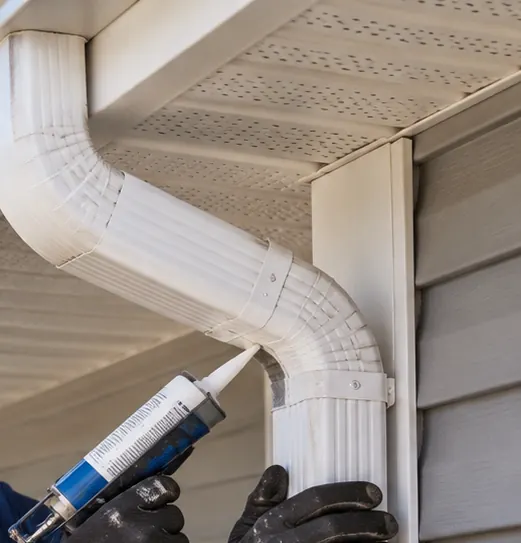
A dirty gutter and a broken gutter look similar from the ground, and the difference matters — one is a routine clean, the other is a fault that gets more expensive every season you leave it. Here is how to tell them apart.
1. Water sheeting over the front edge
Overflow in one spot during rain usually means a blockage. Overflow along a whole length, after a clean, usually means the run has lost its slope or the gutter is undersized for the roof area feeding it.
Fix: re-hang to the correct fall, roughly a quarter inch per ten feet toward the downspout. Usually straightforward.
2. A visible sag or dip
Sight along the run from the ground. It should be a straight line. A dip means hangers have pulled out or the fascia behind has softened.
Fix: replace failed spikes with proper hidden hangers into solid wood, at 24–30 inch spacing. Warning: if the fascia is rotten, no fastener will hold — that is carpentry, and anyone screwing into rot is taking your money.
3. Dripping at a joint or end cap
Sealant has a life. When it fails, the seam weeps constantly, and the wall and soffit below stay wet.
Fix: cheap and quick, but only if the old failed sealant is completely scraped out first. Caulking over old sealant is the single most common bad repair we see, and it never holds.
4. Peeling paint or staining on the siding below
A vertical stain or peeling strip down the wall is a map of exactly where water has been running for months.
Meaning: there is an ongoing leak above it. Trace it up and you will find the fault.
5. A gap between gutter and fascia
If you can see daylight behind the gutter, water is running down the back — straight into the fascia board and the soffit. This one gets expensive fast.
Fix: re-secure and check for rot. Act quickly on this one.
6. Pooling or a washed-out trench at the foundation
Where a downspout discharges, look at the ground. A wet patch or an eroded channel means the water is going into your foundation instead of away from it.
Fix: usually just an extension or a splash block — one of the cheapest and highest-value fixes on the entire house.
7. Rust, holes or splitting seams
Steel gutters rust from the inside out where wet debris sits. Once there are pinholes the section is near the end of its life.
Fix: small holes can be patched as a stopgap. Widespread rust means replacement — and we will tell you that rather than sell you patches.
8. Plants growing out of the trough
Seedlings need soil, and soil means years of accumulated debris that nobody has cleared. There is almost certainly standing water and weight damage underneath.
Fix: full clean, then a careful inspection of everything underneath it.
9. Downspout not running in heavy rain
Stand outside during a downpour. Every downspout should be discharging. One that is silent is blocked.
Fix: clearing and flushing, usually from the bottom up so the clog falls out instead of packing tighter.
What is genuinely cheap versus what is a warning
Cheap and worth doing now: re-seating hangers, resealing joints and end caps, downspout straps and connectors, extensions and splash blocks, clearing blockages.
Warnings you should not ignore: rotten fascia, widespread rust or pinholing, a run that will not hold its slope no matter what, and staining that keeps coming back after a repair. Those mean something structural, and they get worse every freeze.
What we do and do not take on
We handle minor repairs: hangers, sections, end-cap and joint sealing, straps, connectors, extensions, and straightforward leaks. We do not do full eavestrough replacement or new installation — and if that is what your house needs, we will say so plainly and show you the photo rather than sell you a fix that will not hold.