 EavesandGutters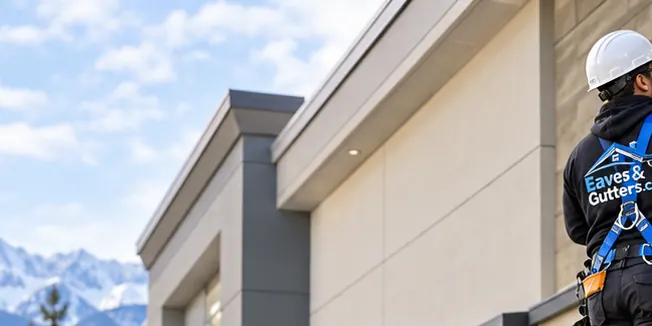
Managing gutter maintenance across a portfolio is a different problem to looking after one house. The work itself is the easy part; the difficulty is scheduling it, proving it happened, and budgeting for it without surprises.
Why commercial properties fail differently
- Larger roof areas feed far more water into the same size trough, so a partial blockage overflows much sooner.
- Flat and low-slope sections with internal drains and scuppers clog in ways pitched residential roofs do not.
- Nobody notices. A homeowner sees the overflow from the kitchen window. At a strip mall it can run for months before a tenant mentions it.
- Consequences land harder — water over a customer entrance, an icy walkway and a liability problem, or water into a tenant's unit and a dispute you have to referee.
- Access is genuinely harder, which means it gets deferred.
Building a schedule that actually happens
Twice a year, booked in advance
Spring after the melt, fall before freeze-up, for the whole portfolio at once, booked at the start of the year. Deferred maintenance is not a saving — it is a bigger bill arriving later with a tenant complaint attached.
Group by geography, not by owner
Properties clustered into route days cost less per property than scattered individual visits, because travel and setup dominate the cost. Tell us the full list and we will group it sensibly.
Inspect after severe weather
A hail event or a serious windstorm justifies a check across the portfolio, not just where someone complained.
Documentation you should insist on
For a board, an owner or an insurer, the work is only as good as the record of it:
- Before and after photographs on every property, every visit, from consistent angles.
- A dated record of what was done, per address.
- Condition notes flagging anything deteriorating, so it can go in next year's budget rather than arriving as an emergency.
- PO or reference numbers carried through onto the invoice so it reconciles without phone calls.
- One point of contact — you should not be coordinating a crew.
That record is also what settles a tenant dispute about water damage quickly and cheaply.
Access and equipment, quoted honestly
Some commercial work simply is not safe from a ladder — three storeys, awkward parapets, or anything over a public walkway. Where a lift or access equipment is needed, that should appear as a clear line item quoted in advance, covering both the rental and the transport.
Be wary of anyone who quotes a tall building at a ladder price. Either they are planning to do it unsafely, or the number is going to change once they arrive.
Budgeting
Our commercial work starts at $249 per property and scales with roof area, storeys, access and the number of downspouts. Grouped route visits bring the per-property figure down meaningfully. For planning purposes, two visits a year per property, plus a contingency for minor repairs found during inspection, covers most portfolios without surprises.
Written quotes come before any work. Nothing gets added to an invoice that was not agreed first.
What we cover
Eavestrough and gutter cleaning, downspout clearing and flushing, minor repairs, gutter guard supply and installation, and scheduled spring/fall maintenance — for strip malls, apartment buildings, condo corporations, offices, churches, industrial shops and acreage properties across Grande Prairie and the Peace Country.
We do not do full eavestrough replacement. Where a run is past repair we will document it so you can get it replaced, and we are happy to maintain it afterwards.